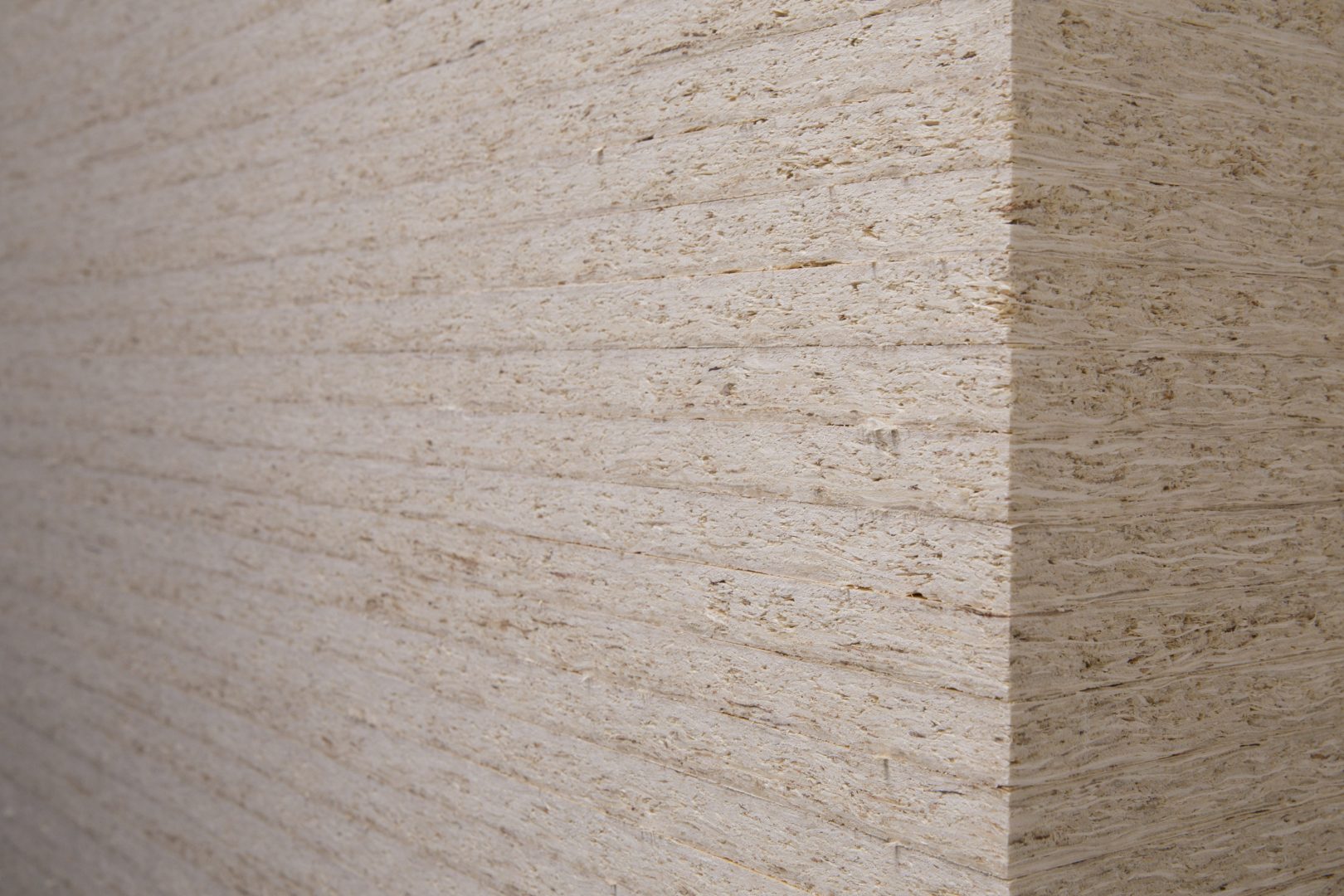
OSB panels (Oriented Strand Board) are today one of the most widespread materials in the lightweight construction and prefabrication sector. Their structure, composed of oriented and pressed wood strands, ensures good mechanical strength and dimensional stability. However, when it comes to exterior use, it is crucial to distinguish between suitability in a humid environment and actual exposure to weather conditions.
Is OSB suitable for outdoor use?
Yes, but only in the correct classes (OSB/3 and OSB/4) and only if integrated into a protected construction system.
Not all OSB classes can be used outdoors, and even the higher-performance versions require proper construction design. Understanding the relevant European standards and the technical limits of the material is essential to avoid application errors.
In this article, we will analyze in detail what the EN 300 standard provides, the differences between OSB/1, OSB/2, OSB/3, and OSB/4, when OSB can actually be used outdoors, and which design measures are essential to ensure its durability and stability over time.
The goal is to provide a clear technical guide, updated for 2026, consistent with professional applications of the material.
Classification According to EN 300: What OSB Classes Indicate
What does OSB/3 or OSB/4 mean?
It indicates the panel’s ability to perform a load-bearing function even in humid environments.
The European standard EN 300 defines OSB panel classification based on mechanical performance and moisture resistance. The four classes are OSB/1, OSB/2, OSB/3, and OSB/4.
- OSB/1 is intended for non-structural indoor applications in dry environments.
- OSB/2 is suitable for load-bearing applications in dry environments.
- OSB/3 is designed for load-bearing applications in humid environments.
- OSB/4 is intended for high-load-bearing applications in humid environments.
The distinction is technical, not commercial: the classification derives from laboratory tests that evaluate bending strength, swelling, and mechanical behavior under controlled conditions.
For protected exterior applications, the relevant classes are OSB/3 and OSB/4, as they offer greater stability in the presence of variable humidity.
For official regulatory reference, the standard text is available on the European standardization body CEN website.
Humid Environment Does Not Mean Direct Weather Exposure
A common mistake is confusing “moisture-resistant” with “weather-resistant”.
OSB/3 and OSB/4 panels are designed for environments with variable humidity, such as ventilated exterior walls, roof substructures, or elements protected by cladding. They are not intended to remain permanently exposed to heavy rain, snow, or standing water.
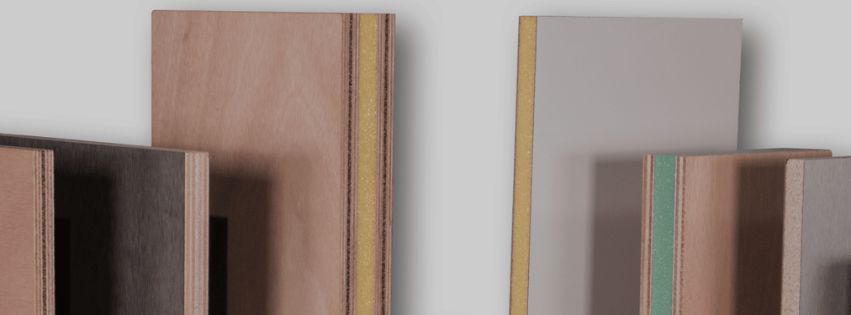
In advanced construction systems, OSB is integrated as a structural panel within complex layers, similar to wood-based systems and structural sandwich panels used in technical and industrial applications.
The EN 300 standard does not define OSB as a material for prolonged direct exposure to weather. For this reason, it is essential to provide wood protection, rear ventilation, and proper surface sealing.
Construction Design and Protection: Key Factors for Durability
The durability of an OSB panel outdoors depends more on construction design than on the material class alone. Construction protection is decisive.
Proper installation must include adequate roof overhangs, edge protection, drainage systems, and ground clearance.
Edges are the panel’s most vulnerable point, as exposed sections can absorb moisture faster than the pressed surface. It is good practice to apply specific sealants and provide a secondary water barrier.
Rear ventilation of exterior walls reduces the risk of condensation and extends the material’s dimensional stability. Design is as important as choosing the OSB class.
The same design logic applies to industrial wood-based systems, where technical panels and structural laminated panels are integrated into multilayer solutions requiring moisture control and construction precision.
Mechanical Performance and Real Application Limits
Structurally, OSB/3 and OSB/4 offer good bending strength and stiffness, which is why they are used in wood frame construction systems.
Permanent water exposure compromises performance over time. Progressive swelling can reduce load-bearing capacity if the panel is not adequately protected.
For fully exposed façades or components in direct contact with the ground, OSB is not the most suitable solution.
Technical Comparison: OSB and Alternatives for Exterior Environments
In particularly harsh environmental conditions, alternative materials may be more appropriate, such as marine plywood certified according to EN 636-3, fiber cement panels, or high-strength composite panels.
- Marine plywood offers higher resistance to prolonged moisture.
- Fiber cement ensures stability even with direct exposure.
- Composite panels, depending on composition, may provide superior resistance to moisture and weather.
Material choice must always consider structural loads, environmental conditions, expected lifespan, and local regulatory requirements. There is no universal material, only a solution appropriate to the context.
Scheduled Maintenance and Long-Term Stability
Even when correctly installed, an OSB panel outdoors requires periodic inspections. Visual checks are recommended, especially after heavy rain or frost.
Surface damage or cracks in protective coatings must be repaired promptly to prevent infiltration. Preventive maintenance helps extend the service life of the construction system.
With proper design and protection, OSB/3 or OSB/4 panels can maintain structural stability for many years in protected outdoor environments.
Regulatory Compliance and Framework in 2026
In 2026, EN 300 classification remains the main technical reference for defining OSB classes in Europe. Manufacturers must guarantee CE marking and Declaration of Performance (DoP) under the Construction Products Regulation (CPR – EU 305/2011).
Regulatory compliance covers mechanical performance, moisture behavior, and fire reaction. It is the designer’s responsibility to verify that the chosen class is consistent with the intended application.
Compliance does not automatically mean universal suitability, but certifies that declared characteristics are met.
Inoltre questa conformità non equivale automaticamente a idoneità universale, ma certifica il rispetto delle caratteristiche dichiarate.
When OSB Is Not the Right Solution
OSB is not suitable for uncoated façades, horizontal elements subject to water pooling, or components in direct contact with the ground. In such cases, moisture absorption can compromise panel stability over time.
Even in industrial contexts, real exposure must be carefully evaluated before selecting the material. Proper preliminary analysis avoids replacements or extraordinary maintenance.
Choosing OSB for exterior use must always result from a conscious technical evaluation, considering environmental conditions, expected lifespan, and the overall construction system.
Only by integrating material, design, and protection can a reliable solution be achieved, consistent with modern construction standards. In professional contexts, the difference is not the panel itself, but the quality of the design solution that integrates it.
Industrial Expertise and Custom Technical Solutions
Although OSB is widely used in construction, in high-specialization industrial contexts, choosing a structural panel requires a broader evaluation.
Companies like Filippi 1971 operate in the development of technical, laminated, and sandwich panels for lightweight structural applications in camper-caravan, nautical, and technical furniture sectors, integrating wood-based materials into advanced production systems.
Experience in designing lightweight components and managing complex stratigraphies allows identifying solutions consistent with strength, durability, and industrial integration requirements.
In professional applications, panel choice is never isolated but part of a larger technical system requiring design expertise and structured production capability.
FAQ – OSB for Exterior Use
Which OSB should be used for outdoor applications?
OSB/3 and OSB/4 are the only classes suitable for humid environments. They must still be installed with adequate construction protection.
Can OSB remain exposed to rain?
Only temporarily during construction. Permanent exposure requires cladding and protection systems.
Is EN 300 still valid in 2026?
Yes. EN 300 remains the European reference standard for OSB panel classification.