The recreational vehicle industry is undergoing a profound transformation, focused on energy efficiency and maximum comfort. In this evolution, weight management plays a crucial role in the vehicle’s performance and safety. Lightweight panels represent the most advanced technological solution for designing modern interiors without compromising the overall mass of the vehicle. Filippi 1971, with its many years of experience in material processing, develops solutions that combine aesthetics with structural lightness. If you are looking for innovative materials for your new models, contact our technical department for a consultation.
What Are Lightweight Panels in the Caravan Industry?
A lightweight panel is a component designed to drastically reduce specific weight compared to traditional materials, while maintaining high mechanical resistance. These materials are not simply surfaces, but true engineered systems.
In the context of campers and caravans, the main objective is to remain within the payload limits established by road traffic regulations. Every furnishing element, if not properly lightweighted, contributes to reducing the loading capacity available for passengers and their luggage.
Beyond Plywood: The Evolution of Composite Materials
The transition from traditional wood to families of composite materials has marked a revolutionary turning point. Although wood remains a fundamental aesthetic element, its density can become a limitation. New-generation lightweight panels use cores made from polymer foams or honeycomb structures.
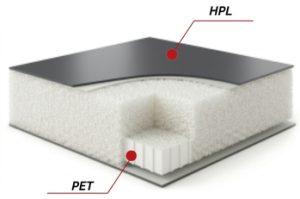
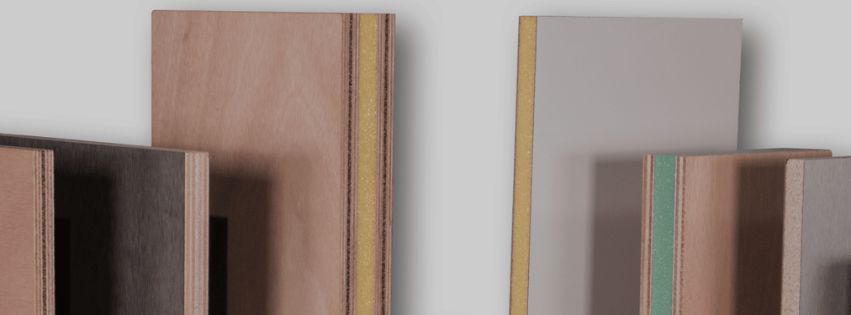
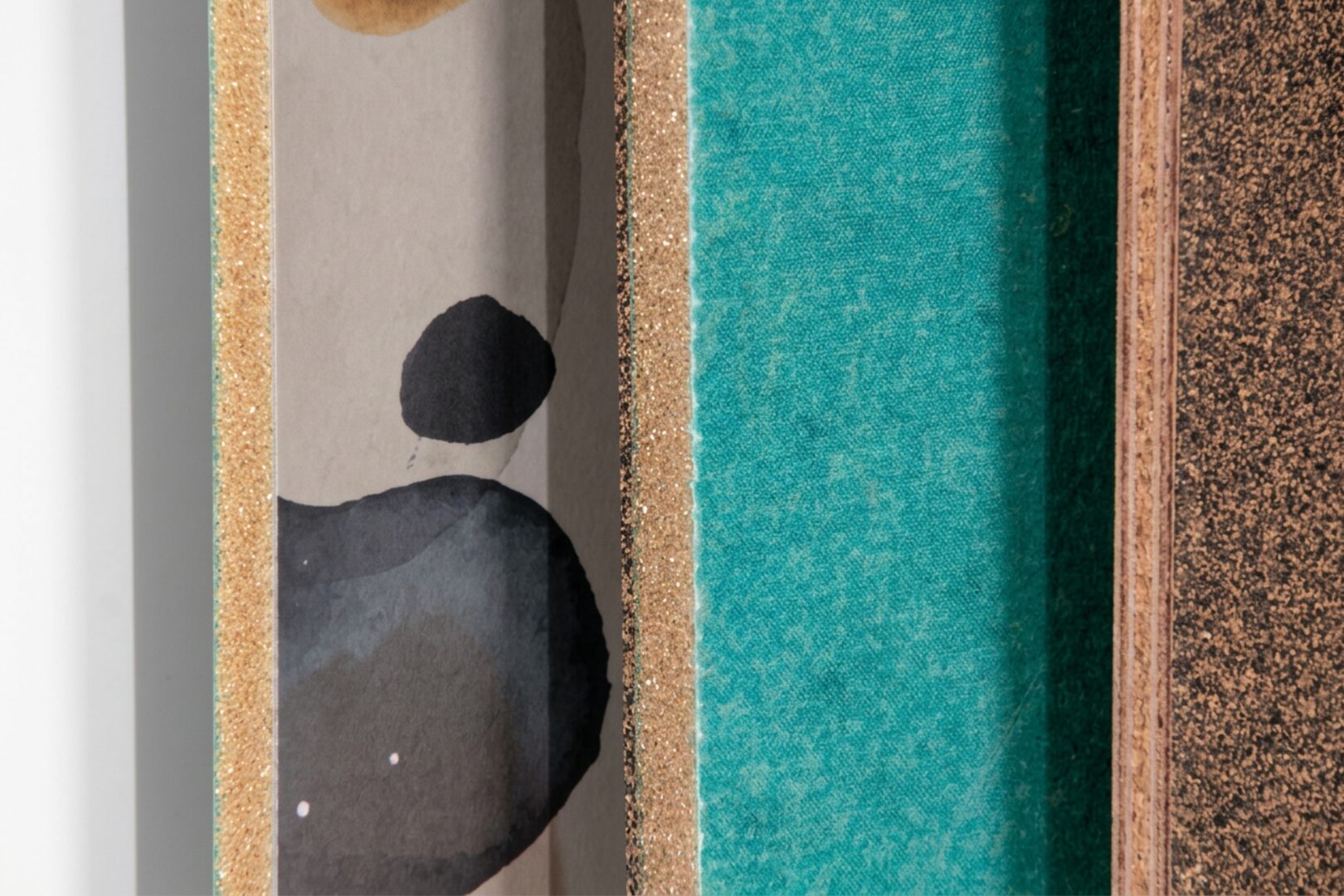
Filippi 1971 selects combinations of materials to achieve the best balance between lightness, resistance, and insulation. They use lightweight plywood outer skins, laminates, or fiberglass, combined with lightweight internal cores such as EPS, XPS, PET, or honeycomb structures. The choice varies according to the required performance and cost, with each panel engineered as a customized system to ensure efficiency and long-term durability.
Honeycomb Panels and Cellular Cores: The Honeycomb Technology
One of the highest-performing solutions is represented by honeycomb panels. These components draw inspiration from nature, using an internal hexagonal-cell structure (honeycomb). This geometry allows forces to be distributed across a very large surface while using a minimal amount of material.
Honeycomb cores made of polypropylene or technical cardboard offer an unbeatable stiffness-to-weight ratio. Thanks to Filippi 1971’s manufacturing technology, these panels can be finished with various types of decorative surfaces, making them ideal for components that require substantial thickness without adding unnecessary weight to the structure.
The Competitive Advantages of Filippi 1971 Lightweight Panels
Working with Filippi 1971 means gaining access to manufacturing processes optimized for industrial production. We do not simply supply raw materials; we provide semi-finished solutions ready for installation.
- Weight reduction: Optimizing weight improves the autonomy of electric vehicles and reduces fuel consumption in combustion-engine vehicles.
- Dimensional stability: Our materials are engineered to resist deformation caused by temperature fluctuations or humidity.
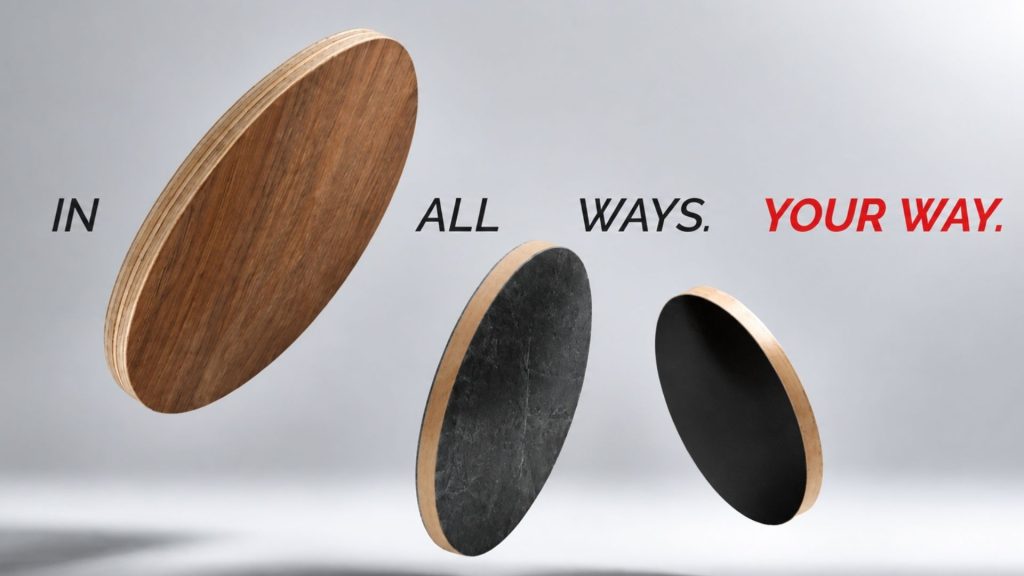
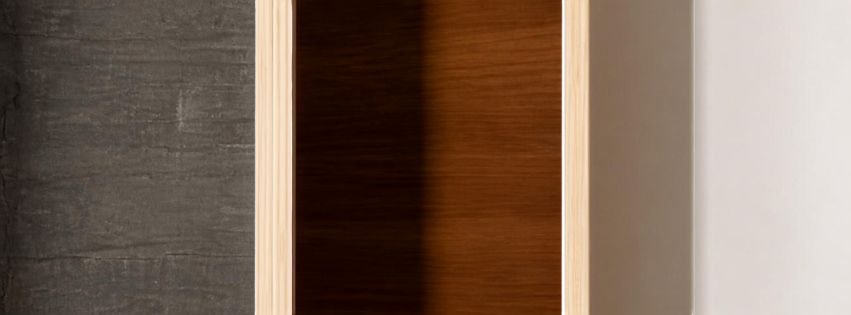
- Wide range of finishes: Thanks to our technologies, panels can be customized with different aesthetic solutions, including decorative laminates, textured finishes, and high-definition digital printing. This makes it possible to reproduce realistic effects such as wood, stone, or custom graphics while maintaining surface resistance and durability.
Our dedication to innovation is reflected in our proprietary brands, such as VittEr® and Moitech®, which define new standards for interior design. Discover more about our company philosophy and research and development activities.
Strategic Applications in Modern Recreational Vehicles
Ultra-light materials can be applied throughout every area of the interior. The versatility of these products allows designers to experiment with shapes and thicknesses that would be unthinkable using traditional panels.
Interior Furnishings and Suspended Furniture: Stability and Lightness
Overhead cabinets and tall furniture elements are those that benefit most from weight reduction. Reducing weight in the upper part of the camper lowers the vehicle’s center of gravity, significantly improving cornering stability and driving safety.
Our lightweight panels are perfect for creating doors, internal shelves, and partitions. The ability to edge and machine these materials with millimetric precision ensures a perfect fit between moving components.
Solutions for Technical Floors and Ceilings
Large surfaces such as floors and ceilings also require specific solutions. A lightweight floor allows the integration of channels for electrical and plumbing systems without compromising load-bearing capacity. Likewise, a technical ceiling made with honeycomb sandwich panels guarantees superior acoustic insulation and a perfectly flat surface ideal for integrated LED lighting.
Materials Compared: Why Choose Industrial Quality
In today’s market, not all materials labeled as “lightweight” offer the same performance. A low-quality panel may suffer from crushing or delamination problems. Choosing the industrial quality of Filippi 1971 ensures long-term durability for the vehicle.
According to the latest European directives on material safety, structural integrity must never be sacrificed solely for weight savings. Our laboratory tests confirm that sandwich composites maintain extremely high safety standards even under mechanical stress conditions.
Sustainability and Performance: An Inseparable Combination
Environmental sustainability is a cornerstone of our production philosophy. The use of lightweight panels directly contributes to the sustainability of the RV sector. Lighter vehicles produce lower CO2 emissions and require less energy for manufacturing and transportation.
In addition, we use certified wood and bonding processes that comply with the strictest limits on volatile organic compound (VOC) emissions. To explore our complete range of decorative surfaces and eco-sustainable materials, consult our online product catalog.
Conclusions: Designing the Future of Caravanning with Filippi 1971
The future challenge for the camper and caravan sector lies in the ability to innovate without losing sight of functionality. Lightweight panels are not just a component, but a competitive advantage for every manufacturer seeking to stand out through quality and technology.
Filippi 1971 is the ideal partner to support you in the transition toward lighter, more elegant, and higher-performing vehicles. Our team is ready to assist you from the prototyping phase through to mass production.
FAQ – Everything You Need to Know About Lightweight Materials
In this section, we answer the most frequently asked questions regarding the integration of structural panels into modern mobility and modular living systems.
Is a Specific Frame Required for Sandwich Panels in the Camper Industry?
The integration of a frame for sandwich panels depends on the nature of the project. In traditional constructions, a supporting skeleton is often required, but thanks to Filippi 1971’s advanced solutions, it is possible to use self-supporting panels that reduce the need for heavy structural frameworks. This allows vehicle weight optimization and improved overall efficiency while maintaining superior structural rigidity.
What Are the Advantages of Sandwich Panels for Campers Compared to Traditional Materials?
The use of high-quality sandwich panels for campers offers an unbeatable strength-to-weight ratio. Compared to traditional paneling systems, sandwich structures provide continuous thermal insulation, eliminating thermal bridges and drastically reducing the risk of internal condensation, which is a critical factor for the long-term durability of recreational vehicles.
Why Is the Expandable Mobile Home Market Focusing on Structural Panels?
The expandable mobile home sector requires materials that are both lightweight for transportation and robust during the opening and closing phases of modular systems. Filippi 1971 structural panels are ideal for these applications, as they provide the stability required for movable walls without compromising the ease of operation of extension mechanisms.
What Factors Influence Sandwich Panel Pricing?
When analyzing sandwich panel pricing, it is important to consider not only the material cost, but also the added technological value. In the professional and luxury caravanning sector, pricing is determined by the quality of finishes (such as HPL laminates), the precision of CNC machining, and the type of insulating core used (XPS, EPS, PET, honeycomb, etc.). Investing in premium components reduces maintenance and assembly costs over the long term.
How Are Camper Panels Used in Modular Structures?
The use of camper panels is expanding into the production of prefabricated designer housing modules. Thanks to the versatility of our production lines, panels can be supplied ready for integration into modular shells, ensuring rapid construction times and energy performance that complies with the latest thermal efficiency regulations.