Anyone designing interiors and structural elements for boats knows that material selection comes with a number of challenges: a panel that is too heavy can affect vessel performance, while a panel that is too lightweight may fail to withstand moisture, saltwater and the mechanical stresses to which it will be exposed.
Okoumé plywood is designed to address precisely the need to find the right balance and has therefore been one of the reference materials in shipbuilding for decades, together with sandwich panels designed to meet the same requirements.
But what distinguishes Okoumé marine plywood, what technical advantages does it offer compared with other wood species, and where is it used on board? Here is an overview of the solutions that Filippi 1971 develops for the marine and naval sectors.
What is Okoumé plywood?
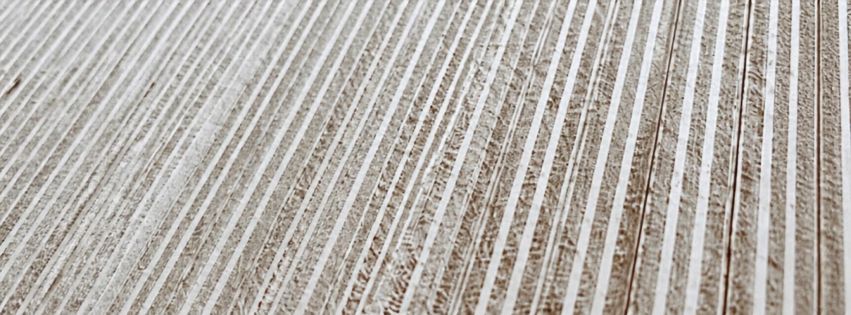
Okoumé (Aucoumea klaineana) is a wood species native to the equatorial forests of Africa, particularly Gabon and Congo. It is processed into thin sheets through slicing or peeling and cross-laminated into layers that are bonded together, following the typical manufacturing process used for multi-layer plywood.
The result is a lightweight panel with a fine, uniform grain, combining good workability with a degree of dimensional stability even under changing humidity conditions.
However, not all Okoumé plywood is automatically suitable for yachts and boats. The key difference lies in the type of adhesive used between the layers: only bonding suitable for prolonged exposure to water and moisture allows a panel to be correctly classified as a marine panel, distinguishing it from standard plywood intended for less demanding applications.
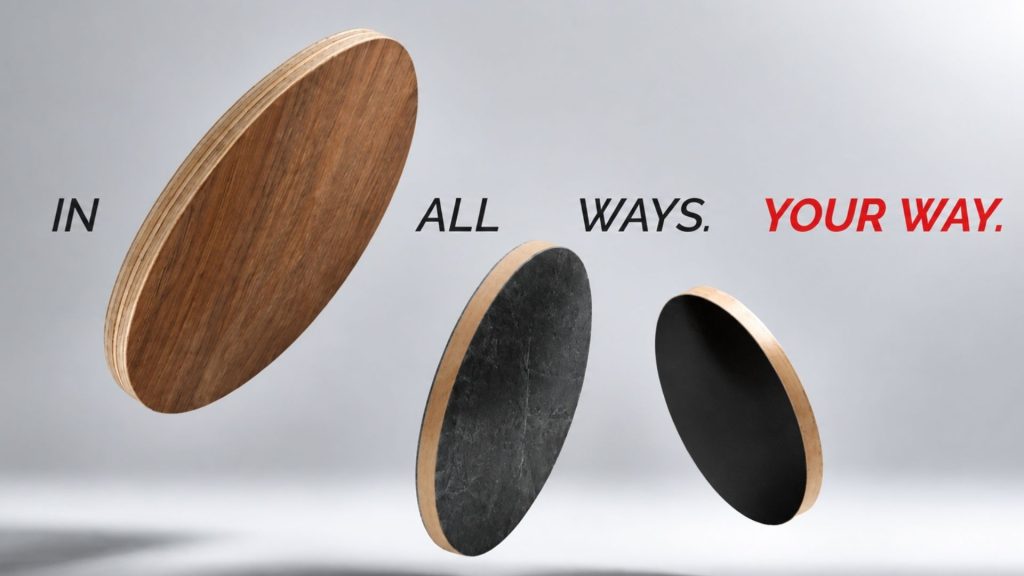
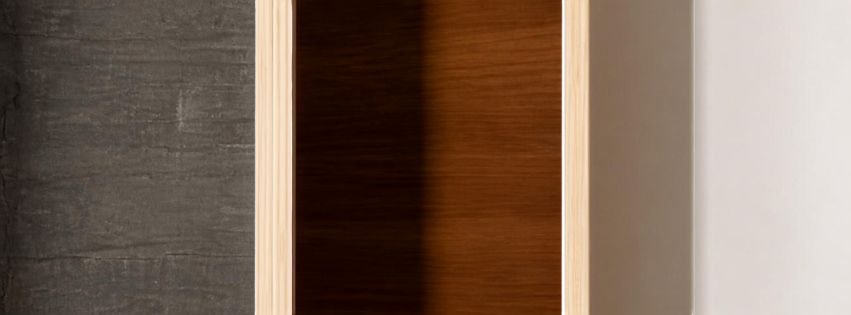
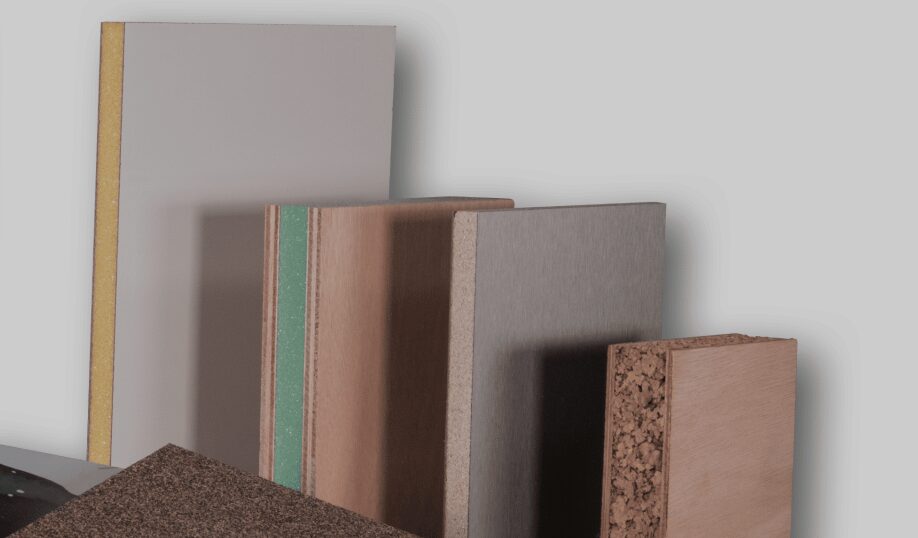
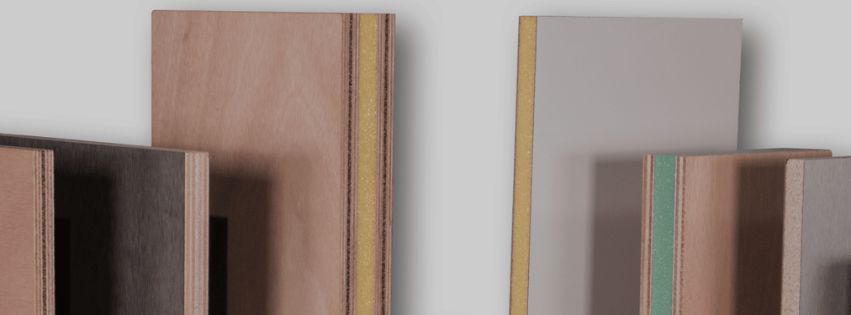
Filippi 1971 primarily works with Okoumé as a premium-grade veneer applied to selected substrates. The range of laminated panels includes Okoumé marine plywood, as well as Italian poplar plywood cores covered with Okoumé veneers. This solution makes it possible to balance weight, cost and aesthetic finish according to the specific application.
The technical characteristics that matter in marine applications
When selecting a panel for interior components or structural elements on a vessel, four key parameters need to be considered:
Lightweight construction. Okoumé generally has a density of approximately 0.6–0.8 g/cm³, significantly lower than that of denser tropical hardwoods such as mahogany. On board a yacht or boat, where every kilogram of interior fit-out can affect fuel consumption, speed and trim, this relative lightness represents a structural advantage before it even becomes an economic one.
Moisture resistance. Thanks to bonding suitable for outdoor environments and contact with water, Okoumé marine plywood maintains its mechanical properties under conditions of high and continuous humidity, typical of lockers, bilges, bathrooms and areas exposed to spray.
Dimensional stability. The cross-laminated structurereduces the risk of deformation, swelling and cracking that can affect solid wood exposed to the same fluctuations in humidity and temperature.
Workability. It is a material that can be easily cut, machined and finished, a particularly valuable characteristic in the marine industry, where curved shapes and bespoke components are often required rather than standard panels.
For specific applications, these characteristics are complemented by requirements relating to fire reaction, mechanical fixing capacity and the sustainability of the raw material.
Filippi 1971 operates under an ISO 9001 quality management system and selects materials compliant with REACH regulations on chemical substances. Where required by the project, certifications and IMO/MED product requirements are available for applications in the naval sector, as well as NAF (No Added Formaldehyde) or zero-formaldehyde panels and materials.
For the origin of the wood raw material, FSC® and PEFC-certified products are also available upon request and where applicable, while the performance characteristics of materials are validated through laboratory testing in collaboration with CATAS, the certification body.
Marine panels or sandwich panels: when to choose one or the other
Okoumé plywood is not the only solution developed by the shipbuilding industry to meet requirements for low weight and strength.
For load-bearing structures and larger partition walls, the industry increasingly relies on sandwich panels, consisting of two outer faces and a technical core, which may be made of polystyrene, honeycomb, PET or other materials depending on the required performance. This construction provides a weight-to-strength ratio that is often superior to that of a solid panel, as well as good acoustic insulation, which is particularly important on board, where crew and owner comfort is an integral part of the design.
In practice, the two product families coexist: Okoumé marine plywood remains a natural choice for furniture components, interior finishes and visible surfaces requiring a high-quality aesthetic finish, while sandwich panels are used where the main priorities are structural weight reduction combined with thermal and acoustic insulation. It is not uncommon for both solutions to be combined within the same fit-out, depending on the function of each individual element.
Applications in shipbuilding
In the construction and fit-out of vessels, Okoumé marine plywood and sandwich solutions are used in a variety of applications:
Bulkheads and partition walls represent one of the most critical applications, as they may need to provide compartmentalisation, fire resistance, water tightness and acoustic comfort at the same time. Filippi 1971 manufactures custom partition walls and structural compartmentalisation systems, using fire-resistant, water-resistant and sound-absorbing materials selected according to the vessel’s configuration.
Furniture components for owner and crew areas, such as bespoke furniture, interior finishes and decorative elements, require a different balance between technical performance and aesthetic appeal. Surfaces can also be customised through digital printing on panels, reproducing specific wood finishes or decorative patterns that are no longer available on the market.
Lightweight load-bearing structures, where sandwich panels replace heavier solutions without compromising mechanical strength, complete the overview of the most common applications on board.
Yachting and naval sectors: two markets, two production approaches
Anyone looking for a panel supplier for the maritime industry should immediately distinguish between two areas which, although they share some of the same base materials, operate according to very different requirements.
The sector as a whole serves boatbuilders, yacht builders, superyacht shipyards, marine interior contractors and companies specialising in naval fit-outs. Within this broader market, however, the yachting segment mainly focuses on custom components and kits integrated into the specific vessel project: yacht bulkhead kits, elements prepared for cable routing and components ready for onboard installation. Here, customers look for dimensional precision, strict compliance with project specifications and the ability to manage complex orders.
The naval segment, on the other hand, involves the industrial production of panels and components for fit-outs on a larger scale, including cabins, common areas and passenger areas.
In both cases, the manufacturing process starts with the surfacing of technical panels – Okoumé marine plywood or technical substrates such as calcium silicate – followed by CNC cutting according to drawings and nesting for shapes and drilling, folding and milling for bending and assembly, and finally technical bonding and gluing to create bespoke composite panels.
How Filippi 1971 supports the marine industry
Filippi 1971 designs and manufactures panels and components for several industrial sectors, including the marine and naval industries.
The company offers a comprehensive range including wood-based and mineral-based veneered panels, sandwich panels, laminates and HPL laminates, as well as the ability to manufacture bespoke bulkheads and furniture components, with dedicated technical support from the design stage onwards.
Whether it is a bulkhead kit for a single yacht or a repeated supply for naval fit-outs, the value that a marine interior contractor or shipyard looks for in a panel supplier remains the same: dimensional precision, compliance with project specifications and production reliability, even for complex orders.